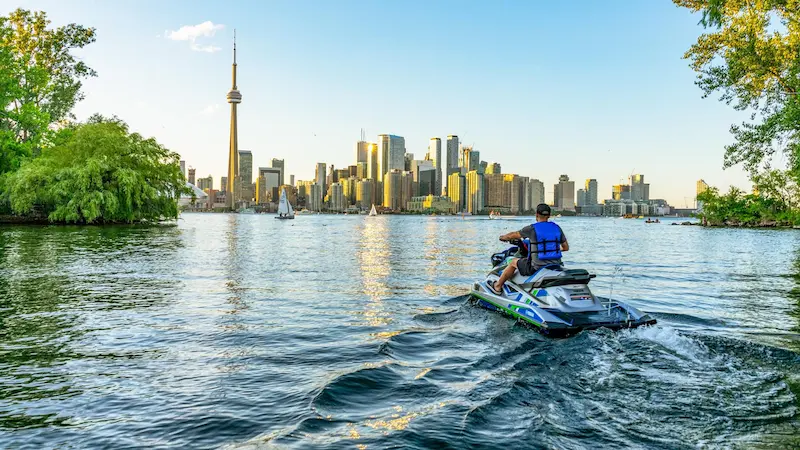
Jet skiing is one of the most thrilling ways to experience Toronto's waterfront. But with that thrill comes responsibility — to the people who share the water with us, to the wildlife that calls Lake Ontario home, and to the shoreline communities that make Toronto's waterfront what it is.
At Jetti, we believe that the future of recreational jet skiing in Toronto depends on operators and riders who take responsibility seriously. Not as a box to check, but as a core part of who we are. This guide covers the regulations every rider should know, the environmental considerations that matter, and the principles we operate by every single day.
Sharing the Water: Respecting Other Waterfront Users
Toronto's waterfront is shared by kayakers, paddleboarders, sailors, canoeists, swimmers, anglers, and families enjoying the shoreline. Every one of them has as much right to the water as we do. Responsible riding starts with recognizing that our actions on a jet ski directly affect the experience of everyone around us.
What This Looks Like in Practice
- Give wide berth to human-powered watercraft. Kayakers and paddleboarders are low to the water and can be difficult to spot. Approach slowly and pass at a safe distance — your wake alone can capsize a canoe or throw a paddleboarder off balance.
- Slow down near shore. Under PortsToronto rules, the speed limit within 150 metres of any shoreline or breakwater is 5 knots (10 km/h). That's walking pace — and it exists to protect swimmers, waders, and people launching from docks. Jetti's onboard GPS enforces this automatically. Even if a rider tries to throttle up in a restricted zone, the system intervenes.
- Respect harbour speed limits. Outside the 150-metre zone, the maximum speed in the Inner and Outer Harbours is 10 knots (19 km/h). These limits are built into every Jetti watercraft and cannot be overridden by the rider.
- Never create a wake near anchored boats. Your wake can cause damage to smaller vessels and is dangerous for people aboard. Slow to idle speed.
- Avoid repetitive riding in the same area. Circling the same stretch creates sustained noise and wake disruption. Vary your route.
The general public's perception of jet ski riders is often shaped by the worst examples — riders who treat the water like their personal racetrack with no regard for others. Every time you ride responsibly, you're pushing back against that reputation and helping ensure that jet ski access on Toronto's waterfront continues for years to come.
Ontario PWC Regulations: Know the Law
These aren't guidelines — they're Canadian federal regulations and PortsToronto harbour rules. Violations carry real fines and can result in loss of operating privileges. Every Jetti rider receives a comprehensive safety briefing covering these rules before their ride.
Important: Toronto's waterfront from Humber Bay to the Eastern Beaches falls under PortsToronto jurisdiction, which enforces stricter speed and distance rules than the standard Ontario regulations.
| Regulation | Requirement | Why It Matters |
|---|---|---|
| 150m Shore Speed Limit | Maximum 5 knots (10 km/h) within 150 metres of any shoreline or breakwater (PortsToronto rule) | Protects swimmers, paddlers, and shoreline wildlife from wake and collision risk. Jetti's GPS enforces this automatically — riders cannot override it |
| Harbour Speed Limit | Maximum 10 knots (19 km/h) throughout Inner and Outer Harbours | Keeps all vessel traffic at safe speeds in shared waters. Automatically enforced on every Jetti watercraft |
| No-Wake Zones | No wake permitted in Toronto Island lagoons or between shoreline and Western Breakwater | Prevents erosion, protects moored vessels, and keeps lagoon areas safe for paddlers and wildlife |
| PVOP + PCOC | Valid Power Vessel Operator Permit (PVOP) and Pleasure Craft Operator Card (PCOC) required within PortsToronto jurisdiction | Ensures every operator is authorized and understands local harbour rules. Jetti's permits and Transport Canada-compliant briefing cover both requirements |
| Life Jacket | Approved PFD must be worn at all times by every person on a PWC | PWCs can stop suddenly or capsize — a PFD is non-negotiable |
| Operating Hours | Sunrise to one hour before sunset only | PWCs lack the navigation lights required for low-visibility operation |
| Minimum Age | 16 years old to operate (Jetti requires 21+) | PWCs require maturity and judgment to operate safely |
| Exclusion Zones | No PWC operation in posted restricted areas (Toronto Islands inner harbour, designated swim areas, marina channels) | Protects high-traffic and environmentally sensitive areas |
How Jetti Enforces These Rules — Automatically and Without Override
Every Jetti watercraft is equipped with GPS geofencing that defines approved riding zones, speed limits, and no-wake boundaries. These aren't advisory warnings — they're hard limits built into the watercraft's control system. When you enter the 150-metre shore zone, the system automatically restricts speed to 5 knots. Approach an exclusion zone, and the system intervenes before you cross the boundary. Riders cannot override, disable, or bypass these restrictions. Combined with our on-water support team monitoring every ride in real time, this means regulatory compliance isn't optional on a Jetti watercraft — it's guaranteed by design.
Environmental Stewardship: Protecting Lake Ontario
Lake Ontario is a shared natural resource. It provides drinking water to millions of people, supports diverse wildlife, and defines Toronto's identity. Jet ski operators have a responsibility to minimize their environmental impact — and at Jetti, we take that responsibility seriously.
Reducing Our Environmental Footprint
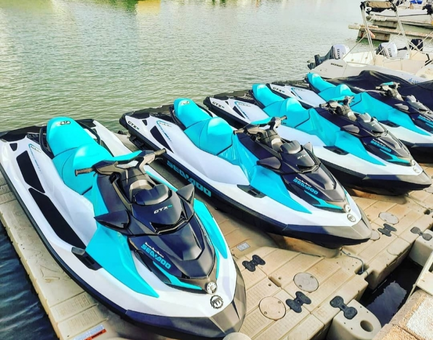
- Modern four-stroke engines. Our Sea-Doo fleet uses fuel-injected four-stroke engines that produce significantly fewer emissions and virtually zero oil discharge compared to older two-stroke models. This isn't just better for the environment — it's quieter too.
- No-idle zones. We brief all riders to avoid idling in shallow or ecologically sensitive areas where exhaust residue could settle.
- Fuel management. All fueling is done on land with proper containment. No fuel transfer happens on the water.
- Spill prevention. Every watercraft is inspected before each ride. Any sign of fluid leak means that craft doesn't go out until it's fixed.
Wildlife Protection: Sharing the Lake
Toronto's waterfront is home to an often-overlooked ecosystem. Cormorants, herons, terns, and other shorebirds nest along the waterfront. Fish spawning areas exist near shore structures. Turtles bask on rocks along the breakwalls. Responsible riders are aware of wildlife and adjust their behaviour accordingly.
Protecting Waterfront Wildlife
- Maintain distance from bird colonies. Nesting birds are easily disturbed by engine noise and wake. Humber Bay's breakwalls and the Leslie Street Spit are important bird habitats — give them space.
- Avoid shallow vegetated areas. Aquatic plants near shore provide fish habitat and nursery areas. Our GPS zones are designed to keep riders clear of these sensitive spots.
- Watch for wildlife in the water. Turtles, waterfowl, and even the occasional swan can appear in riding areas. Slow down and steer clear.
- Minimize wake near shorelines. Excessive wake erodes natural shoreline, destroys near-shore habitat, and can swamp bird nests.
- Report injured wildlife. If you spot injured wildlife during your ride, note the location and let our team know when you return. We'll contact Toronto Wildlife Centre.
Noise: Being a Good Neighbour
Let's be honest — noise is one of the biggest reasons jet skis have a reputation problem. Residents along the waterfront, people picnicking in the park, families at the beach — nobody wants sustained engine noise disrupting their afternoon.
Here's how we address it:
- Modern fleet, lower noise. Current-model Sea-Doo watercraft are significantly quieter than older machines. Four-stroke engines produce a lower, less intrusive tone.
- Route design matters. Our recommended routes keep sustained high-speed riding away from residential shoreline and park areas. Open water is where you open the throttle — not near someone's backyard.
- No unnecessary revving. We brief riders to avoid repeated throttle bursts near shore, docks, or anchorage areas.
- Staggered departures. We don't send out a fleet all at once. Staggered starts reduce cumulative noise impact at the launch point.
Jetti's Commitment: More Than Just Rules
Following regulations is the floor, not the ceiling. Here's what Jetti does beyond the minimum:
- Exceeding age requirements. The law says 16. We require 21+. Jet skis are powerful machines that demand mature judgment.
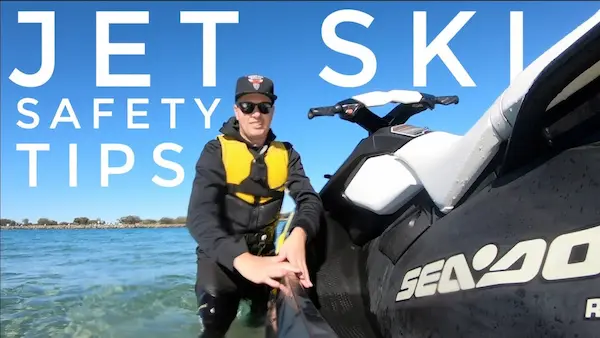
- Comprehensive briefings. Every rider — regardless of experience — gets a full safety and responsibility briefing. We don't skip this for "experienced" riders.
- Real-time monitoring. GPS tracking and on-water support staff mean we can intervene quickly if a rider is behaving unsafely.
- Automatic enforcement, no override. Speed limits, zone boundaries, and no-wake areas are enforced by the watercraft's onboard system. These controls cannot be disabled or overridden by the rider — period. If a rider ignores a warning, the technology takes over.
- 100% safety record. This isn't luck — it's the result of taking responsibility seriously from day one.
- Community engagement. We work with local community groups and waterfront stakeholders. If there's a concern about our operations, we want to hear it and address it.
Our Promise to Toronto
Jetti exists because Toronto's waterfront is an incredible place. We're committed to keeping it that way — for the communities who live here, the wildlife that depends on it, and the riders who come to experience it. If we ever have to choose between an extra booking and doing the right thing, we choose the right thing. Every time.
What You Can Do
Responsible riding isn't just our job — it's a partnership with every rider who books with us. Here's how you can do your part:
- Pay attention during the safety briefing. We know you're excited to get on the water. The briefing takes 30 minutes and it matters.
- Follow the GPS zones. They're there for a reason. If the system alerts you, slow down and adjust course.
- Be the example. Other people on the waterfront are watching. Every respectful ride changes the narrative about jet skiing.
- Speak up. If you see another rider (Jetti or otherwise) behaving irresponsibly, let our team know.
- Share this page. The more riders who understand responsible riding, the better the waterfront is for everyone.
The Bottom Line
The waterfront doesn't belong to jet ski riders. It belongs to everyone. We're guests on the water, and the privilege of operating a PWC on Lake Ontario comes with the responsibility to protect the people, wildlife, and environment that make it worth visiting in the first place.
That's not a burden — it's the whole point. The best ride you'll ever have is one where you had an incredible time and left the waterfront better than you found it.
Ride With a Team That Takes Responsibility Seriously
GPS safety tech, trained on-water support, and a 100% safety record. Experience Toronto's waterfront the right way.
View Pricing & Book